- HOME
- PRODUCTS
- APPLICATIONS
- ABOUT ICESTA
- VIDEO CENTER
- PROJECT&CASE
- NEWS
- CONTACT US



Have you ever wondered how ski resorts keep slopes covered when it gets warmer? An all weather snow making system can make snow in borderline conditions. Traditional snowmaking needs cold weather to make snow. This system makes snow in any weather. This snowmaking technology works when other snowmaking systems cannot. You need snow when temperatures rise. The regular snowmaking system makes no snow. Snow coverage is important for your slopes. This system guarantees snow on your slopes no matter the weather. Snow production continues in all weather. In this guide, you will learn everything you need to pick the right system for your ski resort.
All-weather snowmaking systems make snow in warm weather, but traditional systems need cold weather to work.
These systems use compressed air expansion to make temperatures very cold, allowing snow to be made even when it is up to 77°F.
They stretch the ski season, letting resorts open sooner and stay open longer, which increases their income.
All-weather systems give steady snow coverage, so resorts rely less on natural snow and weather forecasts.
They give resorts more control over snow quality, so they can make the perfect texture for each slope and event.
Proper sizing and careful planning of the infrastructure are key to handling the busiest times and keeping the system running well.
When comparing systems, consider the total cost of ownership, including energy, maintenance, and lifespan.
Pick a supplier who has a solid track record, proper certifications, and dependable support to keep things running smoothly for years.
Old-style snowmaking needs cold weather. You need a wet-bulb temperature of 28°F or lower. This limit means you can only make snow during cold nights. Your snowmaking season is short. An all weather snow making system breaks this limit. This system can make snow at higher temperatures. You can make snow even when the air feels warm. This technology changes how you plan your snow coverage. You can make snow on any day of the season. The system works when other systems cannot. Your ski resort gets more snow on the slopes. The snow stays on the trails longer. You get more snow for your base layer.
Wet-bulb temperature mixes air temperature and humidity. It tells you the real conditions for snowmaking. Dry air allows more evaporation. More evaporation means faster cooling. High humidity slows down evaporation. Your system needs more energy to make snow. All-weather snowmaking systems handle high humidity better. They use advanced technology to beat this challenge. You get reliable snow production in more weather conditions. This ability gives you more control over your snow supply. The quality of the snow also improves. You can make snow that lasts longer.
Ski Ward shows the power of all-weather technology. The resort started its all-weather snowmaking machine in October. It made over three feet of snow on its beginner slope by November 1. This result gives you a big advantage. You can open your season earlier. You can cover your slopes with snow before the first cold snap. Your guests enjoy more skiing days. You get more money from an extended season. The snow stays on the trails longer. You need less snow to keep coverage.
You gain flexibility with an all-weather system. Ski Ward moved its old machines to other slopes. The team replaced older equipment with the new system. This change let them open the summit in just a couple of nights. You can use your resources better. Your snowmaking work becomes more efficient. This reliability means you have snow when you need it. You can rely on the system for year-round work. The steady snow production helps your planning. You can make snow on demand. This efficiency saves you time and money. You can handle any weather that comes your way.
Some people mix up all-weather technology with cloud-seeding. Cloud-seeding puts silver iodide into the air. An all weather snow making system is different. It makes snow on the ground using water and compressed air. No chemicals go into the air. The process is safe and controlled. You do not change the weather. The snow is pure water.
Another wrong idea links all-weather systems to geoengineering. Geoengineering tries to change the climate on a large scale. This technology does not change the weather. It only makes snow in one area. You control the output. You decide where the snow falls. This is a small-scale operation. Your system stays on the ground.
Some worry about harm to the environment. The silver iodide used in cloud-seeding raises concerns. But this technology uses only water. No toxic substances are involved. The snow is safe for people and the environment.
Finally, some think these systems are just experiments. But ICESTA has over 17 years of experience. Their technology is proven. Many resorts use these systems successfully. You can trust this technology. Your system will work as expected in any weather.
Your all weather snow making system starts with water and air. Water comes from a pond or reservoir. The system sends it through a pump station. The pump raises the water pressure to a high level. Compressed air joins the water at the snow gun. The air pressure ranges from 70 to 120 psi. This pressure is essential for the next step. The compressed air expands when it leaves the nozzle. This expansion cools the air dramatically. A calculation shows that 32°F air expanding from 70 psi can drop to -160°F. This extreme cold makes snow possible in warm weather. You get reliable snow production even when temperatures rise.
The cold air creates tiny ice crystals through homogeneous nucleation. This process happens when water droplets freeze at temperatures near -40°F. The expanding air creates these conditions. Larger water droplets then hit these ice crystals. This second step is heterogeneous nucleation. The droplets freeze on contact with the crystals. This two-step process ensures consistent snow quality. Your system can make snow in conditions that stop traditional systems. The snow crystals stay small and dry. This gives you better cover for your slopes.
The snow gun mixes water and air at the nozzle. Different nozzle designs create different snow textures. Some guns produce dry powder snow. Others make wetter snow for base building. You choose the right nozzle for your needs. The system coordinates multiple guns across your slopes. This coordination ensures even coverage. You can adjust density for different trail uses.
The wet bulb temperature governs your snowmaking efficiency. At higher wet bulb temperatures, droplets freeze slower. Some droplets may not freeze before they hit the ground. This creates slushy snow. Your all-weather system overcomes this limit. The compressed air expansion creates such extreme cold that freezing happens fast. You get quality snow even in warm weather. ICESTA builds equipment that works in extreme climates. Their NEOM desert project used a flake ice system. ICESTA also offers dedicated snow-making machines for all-weather conditions. These machines produce snow at temperatures up to 77°F+ in any weather. The snowmaking process becomes reliable across all weather conditions.
Water conditioning improves your snow quality. The system removes impurities from the water. Clean water freezes more consistently. Additives can also help. One key advancement is a protein from Pseudomonas syringae. This protein provides a surface for ice crystal formation. It promotes freezing at much warmer temperatures than normal. This reduces the need for extreme cooling. You get more efficient snow production in warm weather. The snowmaking technology advances with these additives.
Your system uses smart controls to manage the entire process. The control system coordinates compressors, pumps, fans, and protection equipment. You can monitor everything remotely. It shows alarms and trends. You can adjust settings without going outside. The workflow follows a clear sequence. First, water preparation happens. It sources and prepares the water. Second, refrigeration begins. The prepared water freezes through a refrigeration circuit. This circuit also rejects heat from the water and equipment. Third, the controls manage the snowmaking process. You can see the status of each component. Fourth, snow delivery happens. The frozen water processes to the right texture. It then conveys or blows the snow to the activity area. This automation gives you control over your supply. You can match output to your target depth and schedule. You can also coordinate with venue operations. The all weather snow making system works with drainage, storage, and visitor planning. Your ski resort gets reliable coverage every day of the season. The ski season extends with this snowmaking technology. Cold weather conditions improve your efficiency. You can monitor weather trends to plan your production. The data helps you decide when to run the system.
Old-style snow cannons only make good snow when the wet-bulb temperature drops below 28°F. During cold nights, you get steady snow quality. But when it warms up, the snow turns slushy. The output rate drops too. You might only make snow for a few hours a day. This limits how much snow you can produce. Your ski season depends on those cold nights.
An all weather snow making system changes that. You can make snow even when it is warm outside. The system uses compressed air to create very cold temperatures. This cold air freezes water droplets right away. The snow stays high quality even in warmer weather. The output rate stays the same. You can make snow all day and night. That means more snow for your slopes. Your coverage gets better. Your guests see improved conditions.
The new system also gives you better control over snow quality. You can change the water-to-air ratio. This lets you adjust the snow texture. You can create dry powder for the top layer. Or you can make wetter snow for the base. This control helps you build a stronger surface. The snow lasts longer on the trails. The all weather snow making system works in more weather conditions. You get dependable snow production. The snow quality remains consistent. That matters for race courses and special events.
Traditional snowmakers use plenty of energy. They run at night when temperatures are lower. The fans and pumps work hard. But they only make snow for part of the day. The energy cost for each unit of snow is high. You pay for the system but get limited results.
The all-weather system uses energy in a different way. It runs nonstop. The system relies on refrigeration and compressed air. The power use is higher each hour. But the daily output is much greater. This makes snowmaking more efficient. You get more snow for every kilowatt-hour. The system is designed to save energy. Your energy-efficient choice pays off over time. The equipment works harder but gives you more value.
Water efficiency gets better too. Traditional systems lose water through evaporation. Some droplets never fully freeze. Water also runs off the slopes. The all-weather system freezes more of the water. Less water goes to waste. This saves water and cuts your costs. ICESTA's energy-efficient design helps you save money. You also lower your environmental impact. Your efficiency improves in every area.
Traditional snow cannons need regular upkeep. Nozzles get clogged with debris. Water filters require cleaning. Moving parts wear down over time. You replace parts each season. A traditional system usually lasts about 10 to 15 years.
All-weather systems have more parts. They include compressors, pumps, refrigeration units, and control systems. That means more components to maintain. But these parts are built for heavy use. ICESTA uses durable materials in its equipment. The machines last a long time. The snowmaking system includes automation for monitoring. You can track performance and catch problems early. This helps you plan maintenance. With proper care, the lifespan can exceed 20 years. Your total cost of ownership may be lower.
You will need to train your staff on the new system. The controls are more advanced. But the reward is better reliability. You face fewer breakdowns during peak season. The equipment works in any weather. This makes your ski resort more dependable. Your guests enjoy consistent conditions. Your business benefits from the investment.
Snow making means using machines to create snow. You control the whole process. Your all-weather system uses water and compressed air. It freezes them into snow crystals. This snow lands exactly where you want it. You pick the snow quality and how much to make. You can change the water-to-air mix for different textures. Dry powder works best for the top layer. Wetter snow helps build a strong base. This process gives you steady coverage. You do not rely on natural snowfall. Your system makes snow even in warm weather. The technology uses cooling and compressed air. These parts create freezing conditions up to 77°F. You gain full control over your slopes. This method supports your whole resort. You can open early and close late. Your guests enjoy steady conditions all season. The system runs day and night. You make snow when you need it. This snow closely matches natural snow. Skiers see little difference. Your resort keeps a professional image.
Snow falling means natural precipitation. Mother nature controls this process. Weather patterns bring moisture and cold air together. Ice crystals form in clouds. They grow heavy and drop to the ground. You have no control over this snow. You cannot predict when or how much will fall. Some winters bring lots of snow. Other winters bring very little. This change creates problems for your resort. Natural snow melts fast during warm spells. Your base depth shrinks without warning. You depend on weather forecasts for planning. These forecasts often change. Your choices become risky. Natural snow also varies across your land. Wind moves snow into certain spots. Other slopes stay bare. This uneven cover upsets your guests. You need a backup plan. Your snowmaking system fills the gaps. It adds snow when needed. You use both sources for the best cover. Natural snow is free when it comes. But you cannot rely on it alone. Your business needs certainty. Artificial production gives you that certainty.
Snow spray means poor-quality snow conditions. This term covers several issues. Wind can blow snow off your trails. It piles up in unwanted places. You lose cover where you need it most. Temperature changes also create snow spray. Warm air melts the snow surface. Refreezing makes icy patches. This uneven snow frustrates skiers. They deal with changing conditions. Snow spray can also mean poorly made artificial snow. Older systems sometimes make wet, slushy snow. The snow does not freeze fully before landing. It forms a heavy, uneven layer. This snow melts quickly. It gives poor cover for your slopes. Your all-weather system avoids these issues. It makes steady, dry snow. The advanced tech ensures proper freezing. You get even cover across your land. This reliability matters for race tracks. Event planners demand perfect conditions. Your guests expect smooth rides. Snow spray hurts your reputation. Skiers remember bad trips. They may pick another resort next time. You stop this problem with quality equipment. Your system delivers dependable snow every day. You keep high standards all season. Your investment protects your brand.
Base snow is the foundation of your ski season. An all weather snow making system helps you cover trails on time. You get a steady and strong snow surface. This reliability keeps guests happy. Your resort opens when planned. Weather does not delay your schedule. You make snow even when it is warm. The system works day and night to build depth. You decide where snow lands. This helps you cover tough terrain. You fill bare spots fast. Snow quality stays high the whole time. You need less natural snow to keep coverage. This saves money on water and power. Guests enjoy smooth runs from day one. The base lasts longer on trails. Your base depth grows steadily. You can handle any weather that arrives.
Race courses need perfect conditions. You build top surfaces for alpine, snowboard, and freestyle athletes. The system makes ideal snow for practice and events. You promise snow for competitions. Weather cannot stop you. Your resort draws big races. This brings visitors and income. The community gains jobs and economic growth. Your reputation grows with each event. The table below shows key uses and how they are measured.
Application | Success Metrics |
|---|---|
Base building | Opening on scheduled date, consistent and durable snow surface |
Race course preparation | Optimum surfaces for elite alpine, snowboard, and freestyle athletes to train and compete |
Season extension | Staying open longer, increased community jobs and revenue, improved climate resilience |
Indoor ski resorts have special challenges. You control the temperature inside the building. The system must work in a closed space. Heat from lights and people affects the area. You need steady snow production. The all weather snow making system handles these conditions. You make snow all year long. This gives you full control over your snow supply. You can run no matter the outside weather. Indoor resorts depend on this technology. You keep slopes covered every day. The system follows your schedule. You can make snow at night or during slow times. Quality stays high in any indoor setting. Indoor resorts benefit from reliable snow. You can plan your season without stress. The technology fits your building layout. Indoor resorts gain an edge over competitors. You give guests dependable conditions. This builds trust and repeat visits. Indoor resorts become year-round destinations. They need reliable snow daily. The system runs around the clock. You never stress about running out of snow.
Low-elevation resorts face the hardest conditions. Weather gets warmer at lower heights. Many resorts sit at 1300 meters or below. These places risk losing snow coverage. Your system fixes this problem. You can make snow above freezing temperatures. The system works when old snowmaking fails. You need steady snow for guests. Altitude does not limit your work. You can keep slopes open in warm winters. Snowmaking can guarantee snow above 1000 meters for 90 percent of winters. In warmer climates, current snowmaking will not be enough below 1500 to 1600 meters. Potential snowmaking days drop by one third in November at high altitudes. They also drop in December at lower altitudes. Thirty percent of Alpine ski resorts sit at 1300 meters or below. These resorts face the most risk. Snowmaking hours in Austria fell 26 percent from 1961 to 2020. Most losses happen at lower elevations. Average winter temperatures for Alpine areas between 1000 and 1500 meters rose from about 0 degrees Celsius to 2 to 3 degrees Celsius by 2020. This is far above workable snow conditions. Your system beats these challenges. You make snow in warm weather. Your slopes stay open. Your business stays strong. You need trail coverage. The base holds firm. Guests enjoy reliable snow conditions.
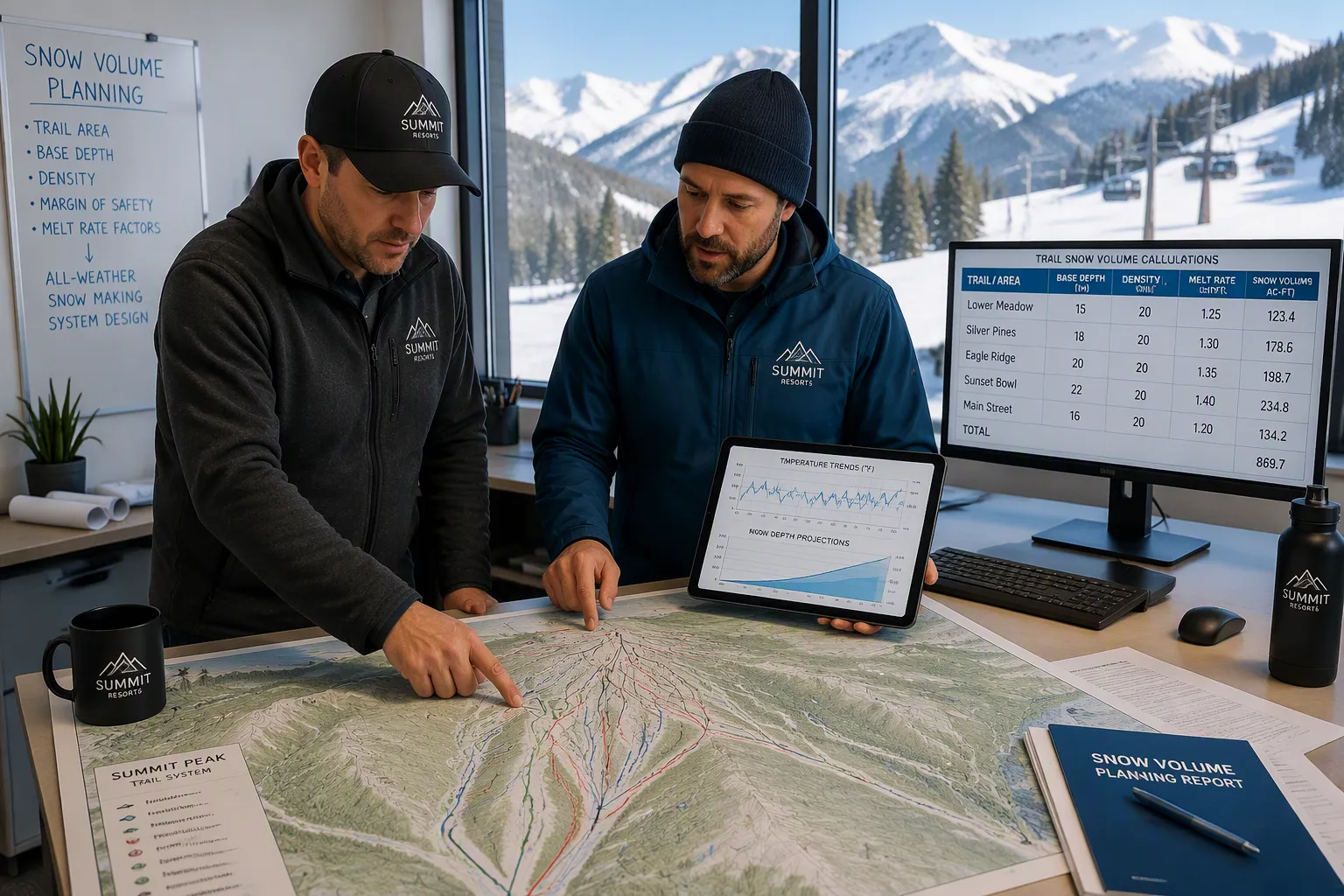
You need a clear picture of your snow volume before you buy any equipment. Start with your total trail area. Measure every slope you plan to cover. Multiply that area by your target base depth. A typical resort wants 24 to 36 inches of base snow for early season. Your number changes based on terrain difficulty. Steeper slopes need deeper bases for safety. Beginner areas need less depth but more frequent grooming.
Melt rate factors make your calculation harder. Warm spells remove snow from your trails. Rain events speed up the loss. Wind blows snow off exposed ridges. You must replace this lost volume all season. Industry research shows that peak snow demand happens around holiday periods. Christmas and Spring Break bring the most visitors. Snowpack problems during these times have big revenue effects. A 2007 case study shows this pattern clearly. California, New York, and Vermont had much lower snowpack during peak times. Their revenue losses grew fast. Colorado, with annual snowpack at only 88 percent of its long-run average, actually gained money. Colorado had better-than-average snow during key holiday periods. This evidence shows that peak demand ties to snow conditions during specific busy times. Good snow on other days cannot make up for poor holiday conditions. Your volume calculation must put these peak periods first.
You also need to look at your local climate history. Review at least ten years of temperature records from your site. If you don't have on-site data, use nearby weather stations. Adjust these numbers for future climate projections over 10 to 25 years. Your system must handle warmer winters ahead. The all weather snow making system gives you that margin. You can produce snow when old systems cannot. Your volume planning becomes more reliable with this technology.
Your system capacity must match your peak demand times. You cannot afford to fall short during Christmas week. Calculate your required snow output using a clear method. First, find your water need. Multiply your assumed conversion density by the required snow depth. Industry records show 180,000 to 200,000 gallons per acre-foot. Or, use past records of water used per acre from your old system. Second, make a table of operating hours within wet-bulb temperature ranges. Common ranges include 28 to 25°F and 25 to 20°F. Third, pick a capacity target that gets your coverage in 8 out of 10 years. This target balances cost against revenue benefits. The table below shows this calculation.
Step | Calculation / Metric | Key Inputs & Data Sources |
|---|---|---|
1. Water Requirement | Multiply assumed conversion density (180,000–200,000 gallons per acre-foot) by required snow depth. Or use past records of water used per acre. | Past water consumption records from your old system. |
2. Operating Hours & Temperature | Make a table of operating hours within wet-bulb temperature ranges (e.g., 28-25°F, 25-20°F). | At least 10 years of past on-site temperature records; translations from nearby weather stations if on-site data is not available. Adjust for future climate projections (10–25 year timeline). |
3. System Capacity Target | Pick capacity to get target coverage in 8 out of 10 years. | Economic analysis comparing cost of upsizing vs. revenue/marketing benefits. |
4. Utilization Rate | Ratio of average water flow rate to full pumping capacity. Low (<60%) = underused; High (>80%) = need more pumping capacity. | Total water pumped and hours of operation. |
5. Snow Energy Index (SEI) | Energy used (kWh) per 1,000 gallons of water. | Energy use logs and water usage data. |
Your utilization rate tells you about efficiency. A rate below 60 percent means your system sits underused. A rate above 80 percent means you need more pumping capacity. Track your total water pumped and hours of operation. The Snow Energy Index measures energy used per 1,000 gallons of water. This metric helps you compare performance across seasons. ICESTA offers a range of snow-making machines with different daily outputs. Their equipment produces from 70 m³ to 210 m³ or more each day. You can customize your choice to meet your specific demand. This flexibility lets you match your snow output to your resort's unique needs.
You need buffer capacity beyond your calculated minimum. Weather forecasts change quickly. A warm spell can force you to make snow at higher temperatures. Your all weather snow making system handles these conditions. But you still need extra capacity for unexpected events. Plan for at least 15 to 20 percent more snow output than your baseline calculation. This buffer protects you during equipment maintenance. It also covers periods of high demand when you must run all the time.
Redundancy matters for critical parts. Your pumps, compressors, and control systems should have backups. If one unit fails, another takes over. This design keeps your snow production running. Your guests never notice a problem. Your slopes stay covered. Your reputation remains strong. The system's automation helps you watch performance. You can find problems before they become failures. This proactive approach cuts downtime. Your investment in redundancy pays off during peak weeks. You cannot afford a breakdown during Christmas. Buffer capacity and redundancy give you peace of mind. Your resort delivers consistent conditions all season. Your snow quality stays high. Your guests come back year after year.
Your water supply is the base of your whole operation. You need enough stored water to cover your trails during busy times. Figure out your pond size based on your snow volume needs from the last section. Your reservoir must hold water for several days of snowmaking. This backup helps you during dry spells or when water sources freeze.
Your inflow and outflow systems need careful planning. Inflow pipes bring water from rivers or runoff into your reservoir. Outflow pipes with valves let you drain water in a controlled way. These valves stop overflow during heavy rain. They also help you manage water levels by season. You control exactly how much water goes in and out of your storage.
Aeration systems keep your reservoir healthy. Diffusers sit at different depths in the pond. They boost oxygen levels and stop water from going stale. These systems mix cooler bottom water to the top. This mixing keeps your reservoir cold for early snowmaking. It also stops ice from forming during freezing weather. Your water stays ready when you need it.
Water quality management protects your equipment. Sediment basins settle particles before water enters your system. Filtration systems remove dirt that clogs nozzles. Monitoring stations with sensors track water quality. Chemical treatment systems control pH levels. They also stop algae and bacteria growth. Clean water makes your equipment last longer.
Waterville Valley, N.H. shows why filtration matters. The resort put in a semi-automated, self-cleaning 200-micron filter system in its main pumphouse. This pumphouse handles 3,900 gallons per minute. The team added secondary in-line filters between hydrants and gun bases. These filters remove sediment picked up in on-hill pipes. This investment protected their new low-energy gun fleet.
Your all-weather snow making system needs a lot of electrical power. Compressors, pumps, and fans all use a lot of electricity. You need a power network that reaches every snow gun spot. Plan your electrical layout before you install anything. This planning stops costly fixes later.
Vail, Colo. shows smart power planning. The resort added electrical lines to power fans and automation at Mid-Vail. Having electricity already there made this work fairly easy. You should check your current power setup early. Find areas where you need new lines. This check shapes your whole project timeline.
Backup generators protect your work. Power outages during cold snaps can stop snow production. Your slopes lose coverage at the worst time. Install generators that can run your key parts. These include pumps, compressors, and control systems. Your backup power keeps snowmaking going through any outage. This reliability matters during busy holiday times.
Compressed air systems need their own planning. Your air compressors need clean, dry intake air. Place them away from dust and moisture sources. Size your air lines to match your snow gun needs. Undersized lines lower pressure at the nozzle. This pressure drop hurts snow quality. Your system performance depends on proper air delivery.
Your terrain shapes how you place snow guns. Tower guns lift the nozzle above the ground. This height lets snow travel farther before it lands. Tower guns work well on wide trails and open slopes. They spread snow evenly over a large area. Fan guns use a powerful fan to throw snow. These units work better in tight spaces. They also handle changing wind conditions better.
Wind considerations affect every placement choice. Strong winds blow snow off your target. This waste lowers your coverage and raises costs. Study your local wind patterns before installing guns. Place tower guns where they can work with prevailing winds. Put fan guns in sheltered spots. This smart placement gets the most snow from your system.
Your piping network must follow your terrain. Vail installed 101,000 feet of new piping for their expansion. This included 20-inch pipe from a mountaintop reservoir. The project tripled or quadrupled their water capacity. They added one new pump station and rebuilt two old ones. This infrastructure investment changed their snowmaking ability. Your pipe size must match your water flow needs. Larger pipes cut friction losses over long distances. This efficiency saves energy and boosts performance.
Your terrain layout also affects where you put pump stations. Place pump stations near your water source. This closeness cuts suction lift and improves efficiency. Think about elevation changes across your property. You may need booster pumps for higher terrain. These pumps keep pressure at distant snow guns. Your system delivers steady snow quality across all your slopes.
When you start picking snowmaking equipment, look at the technical details first. Check the snow output capacity for each machine. Look at the range of temperatures it can work in. See how much power it needs. These numbers show if the equipment fits your resort. Also compare how much water each system uses. A system that uses less water for the same snow saves you money over time.
The warranty terms are just as important. A standard warranty covers each part for one to two years. Read the fine print carefully. Some warranties do not cover parts that wear out fast. Others need you to use certain repair services. Ask what the warranty does not cover. This helps you avoid surprise costs later. You want a warranty that matches how long the equipment should last. A longer warranty often means the maker trusts its product.
The purchase price is only part of your total cost. Installation costs can add a lot to your budget. You need to set up your site with proper pipes and electrical hookups. The land may need extra grading or foundation work. Ask the supplier for a detailed installation quote. This quote should include all labor, materials, and gear to get the system running.
Training your team adds more cost. Your staff needs to learn how to run the new controls. They must know how to watch the automation systems. They need to learn how to fix common problems. Some suppliers include training in the deal. Others charge extra for it. Include these costs in your budget from the start. Ongoing support also matters. You want a supplier who answers fast when problems come up. Ask about their average response time. Check if they offer remote monitoring help. These services keep your system running well all season.
A simple price comparison does not tell the whole story. You need to look at the total cost of ownership over the system's life. Energy efficiency is a big part of this analysis. The Snowmaking Energy Index (SEI) helps you compare systems fairly. This metric measures energy used divided by snow made. You plot this value against wet bulb temperature to make a baseline curve. This curve lets you compare different systems under the same conditions.
To calculate SEI accurately, you need three key numbers. First, measure the electricity used by all snowmaking gear. This includes pumps, compressors, and fan guns. Track this through amperage or kilowatt-hour readings. Second, record water flow data. Only count water used in actual snow production. Subtract any losses from leaks or runoff. Third, measure the wet bulb temperature at a good weather station. These three numbers give you a fair comparison across different systems.
Maintenance costs add up over the years. Routine upkeep includes replacing worn nozzles and cleaning filters. You also need to service the compressors regularly. Unexpected breakdowns in harsh snow and ice lead to high parts and labor costs. These breakdowns also cause downtime. You lose snow production when you need it most.
Depreciation is another hidden cost. Specialized equipment loses value fast. By year five, a machine that cost $300,000 may be worth only $150,000. This creates a gap if you financed the purchase. You must plan for this loss of value.
Storage and transportation costs are often overlooked. Off-season storage needs dry, secure spaces. You may need to pay a third party for this space. Moving heavy equipment needs special trailers and permits. These expenses add up quickly.
Capital lock-up also affects your business. A large purchase ties up cash that could fund staffing or marketing. This lowers your cash flow and flexibility. Think about whether leasing might work better for you. Obsolescence is another risk. Fast technology changes can make equipment non-compliant with new rules. You may face costly upgrades or end up with assets you cannot sell.
Your supplier choice decides your long-term success. Look for a company with proven experience in the industry. ICESTA has over 17 years of expertise in ice and snow solutions. Their track record includes successful snowmaking and snow preservation projects. Many outdoor high-temperature snow fields around the world use their gear.
Certifications give objective proof of quality. ICESTA holds ISO 9001, CE, PED, and ASME certificates. These show that their manufacturing meets international standards. You should ask any supplier for their certification papers. Make sure these certificates are still current and valid.
Global reach matters for ongoing support. ICESTA exports to over 80 countries. They keep local service networks in more than 50 countries. This means help is available when you need it. You do not wait weeks for a technician to come from overseas.
Performance guarantees protect your investment. Ask each supplier about their service level agreements. These agreements define response times and performance standards. They should say what happens if the system fails to meet expectations. A strong guarantee gives you confidence in your purchase. The reliability of your snow production depends on this partnership. Choose a supplier who stands behind their gear with clear promises.
An all weather snow making system is a transformative investment for your resort. The system gives you reliable snow coverage regardless of temperature fluctuations. You make snow in any weather. This system controls your snow production. Your snow quality stays high. Your snow base lasts longer. Your snowmaking season extends. Your resort benefits from consistent snow conditions. Your snow output meets your needs. Your snow coverage becomes reliable. Your snow depth stays consistent.
Careful sizing, site engineering, and supplier evaluation are essential for your system. This guide provides a checklist for your evaluation. Use it to compare systems. Your all weather snow making system must be properly sized. Your site engineering must support the system. Your supplier must have proven reliability.
Start your due diligence by requesting detailed proposals from at least three qualified suppliers. Use the comparison criteria outlined in this guide to make an informed decision.
The system uses compressed air that gets bigger as it leaves the nozzle. This growth makes it extremely cold, down to -160°F. Water drops freeze right away into snow crystals. You get good snow even when it's over 32°F outside.
Yes, indoor ski resorts use all-weather systems well. The system works in closed spaces with managed temperatures. You make snow all year no matter the weather outside. This gives you steady snow for your building.
All-weather systems cost more to buy. But they make more snow each day with better efficiency. Your total cost over time can be lower because of longer seasons and steady snow making.
Your system needs a pond or tank with enough water for many days of snow making. Busy holiday times affect your planning. Plan your water supply based on trail size and how deep you want the base.
Yes, all-weather systems make snow that is very close to natural snow. The system only uses water and compressed air. No chemicals go into the air. Skiers see little difference between fake and real snow.
With good care, all-weather systems can last more than 20 years. ICESTA makes equipment with strong materials for heavy use. The system has automation to watch performance and find problems early.
Normal upkeep includes cleaning nozzles and filters. You also service compressors regularly. The automation system helps you track performance and plan care. This forward-looking method keeps your system running well.
