


For meat processing ice cooling, buyers should first define the product form, chilling objective, loading pattern, and cold-room or process conditions. For seafood or fish-icing applications, the same data pack should include mass, incoming and target temperatures, exposure time, containers, losses, and any known fish-to-ice operating ratio. When the process falls under a food-safety stabilization program, calculation inputs must be kept separate from validation and local authority requirements.
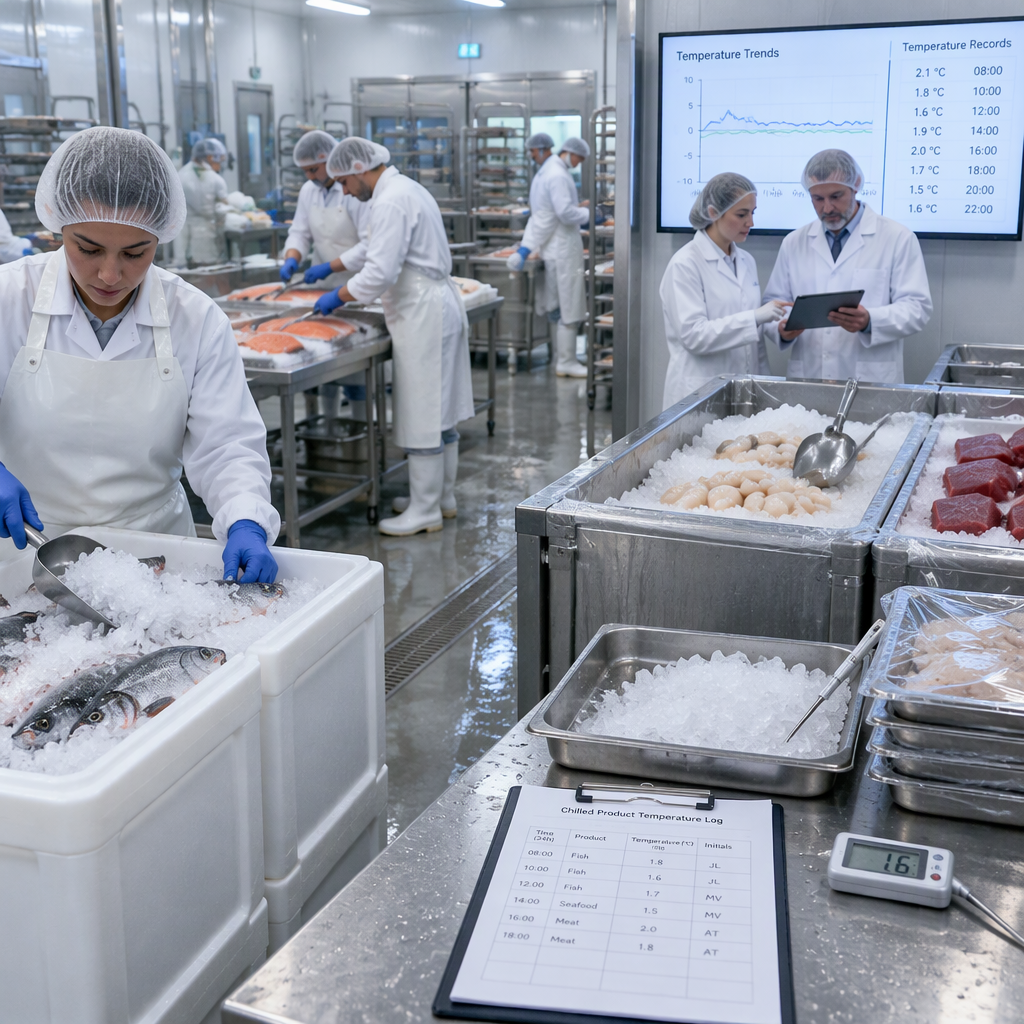
Define the product and chilling objective first
Before discussing equipment, define what product is being cooled, what temperature condition the plant must reach or maintain, and where ice enters the process flow.
- Identify the product category and form: carcass, primal cut, minced meat, prepared meat item, whole fish, fillet, shellfish, or mixed seafood.
- State whether the purpose is rapid chilling after a warm stage, maintaining a chilled state during handling, or supporting cold storage before dispatch.
- For seafood icing, provide the product mass and the intended final condition because ice demand depends on the heat that must be removed and the operating conditions around the product.
- Describe how product is arranged: hanging, boxed, layered in totes, on racks, in trays, or moving through a handling line.
- List air temperature, air movement, relative humidity, and room loading conditions if ice cooling interacts with a chilled room or staging area.
The FAO meat cold-store guidance treats product type, air temperature, air speed, humidity, loading, arrangement, and warm-product staging as relevant chilling variables. That means an RFQ that only says “meat processing ice cooling” is not enough for engineering review.
For seafood, FAO fish-icing guidance explains that operating conditions are needed before ice requirements can be calculated, and that operational testing is used to establish the correct fish-to-ice ratio.
Quantify throughput, temperatures, and heat-load drivers
An engineer needs mass flow, batch size, incoming temperature, target condition, operating time, and practical loss assumptions before estimating ice demand from process data.
| Data field | Why buyers should provide it | Typical buyer note |
|---|---|---|
| Product mass per batch or per hour | Ice requirement calculations depend on the amount of product that must be cooled. | Separate peak throughput from average daily throughput. |
| Incoming and target temperature | The temperature difference defines the heat-removal task together with product mass and properties. | Give measured ranges, not only a design target. |
| Product composition or specific heat assumptions | FAO fish-icing calculations depend on product thermal properties or composition where those values are used. | State whether the supplier should use plant data, literature values, or trial measurements. |
| Storage time and ambient exposure | Ice meltage is affected by exposure conditions, storage duration, container heat transfer, and losses. | Include waiting time before processing, packing, or transport. |
| Room loading and staging of warm product | Meat chilling conditions change when warm product is introduced, arranged, and loaded in cold spaces. | Provide loading sequence and maximum warm-load events. |
For seafood projects, buyers can link process-data expectations to FAO fish-icing guidance, which describes the factors used in ice-requirement calculation and the need for operational testing.
Map handling stages, containers, and storage exposure
Two plants with similar product mass can need different ice usage when containers, exposure time, room loading, and product arrangement are different.
- Map the stages. Show where product is received, trimmed, washed, mixed, packed, staged, chilled, stored, and dispatched.
- Record exposure conditions. Note ambient temperature, time out of cold storage, open-bin dwell time, and any repeated transfer between warm and chilled zones.
- Describe containers. Include tote, bin, box, rack, insulated container, or transport package details because container heat transfer and product packing affect meltage.
- Describe arrangement. State whether product is stacked, layered, hung, loosely filled, or tightly packed because arrangement affects chilling behavior.
- Separate normal and worst-case cases. Provide regular production data and high-load conditions such as peak season, long staging, or delayed dispatch.
Do not assume that a historical ice-use figure from one line will automatically apply to a new product, container, or storage time. Use it as operating experience to discuss, then confirm the ratio through plant conditions and tests.
For meat rooms, loading pattern, air temperature, air movement, humidity, and product arrangement should be treated as process variables, not afterthoughts.
Separate preliminary estimates from operating validation
A planning calculation can support engineering discussion, but it should not replace plant trials, temperature monitoring, HACCP review, or the regulatory requirements that apply to the product and market.
FAO fish-icing guidance distinguishes calculation from operating confirmation by stating that the correct fish-to-ice ratio is established through operational testing under known conditions.
For U.S.-regulated meat and poultry stabilization, the USDA FSIS stabilization guidance addresses control of pathogen growth in heat-treated meat and poultry products and states that the guidance itself is not law unless authorized by statute or contract.
For a global project, provide the applicable market, product category, food-safety plan, authority requirement, and customer standard to the engineering and quality teams. Treat these documents as validation boundaries, not as generic equipment-sizing inputs.
For ice quantity planning, ask for an estimate that shows assumptions for product mass, temperatures, storage time, heat exposure, losses, and contingency rather than a single unexplained ice tonnage.
Prepare an RFQ data pack for an ice-cooling proposal
A useful RFQ data pack gives the supplier enough operating information to judge applicability, estimate preliminary ice demand, and identify what still needs plant testing or regulatory confirmation.
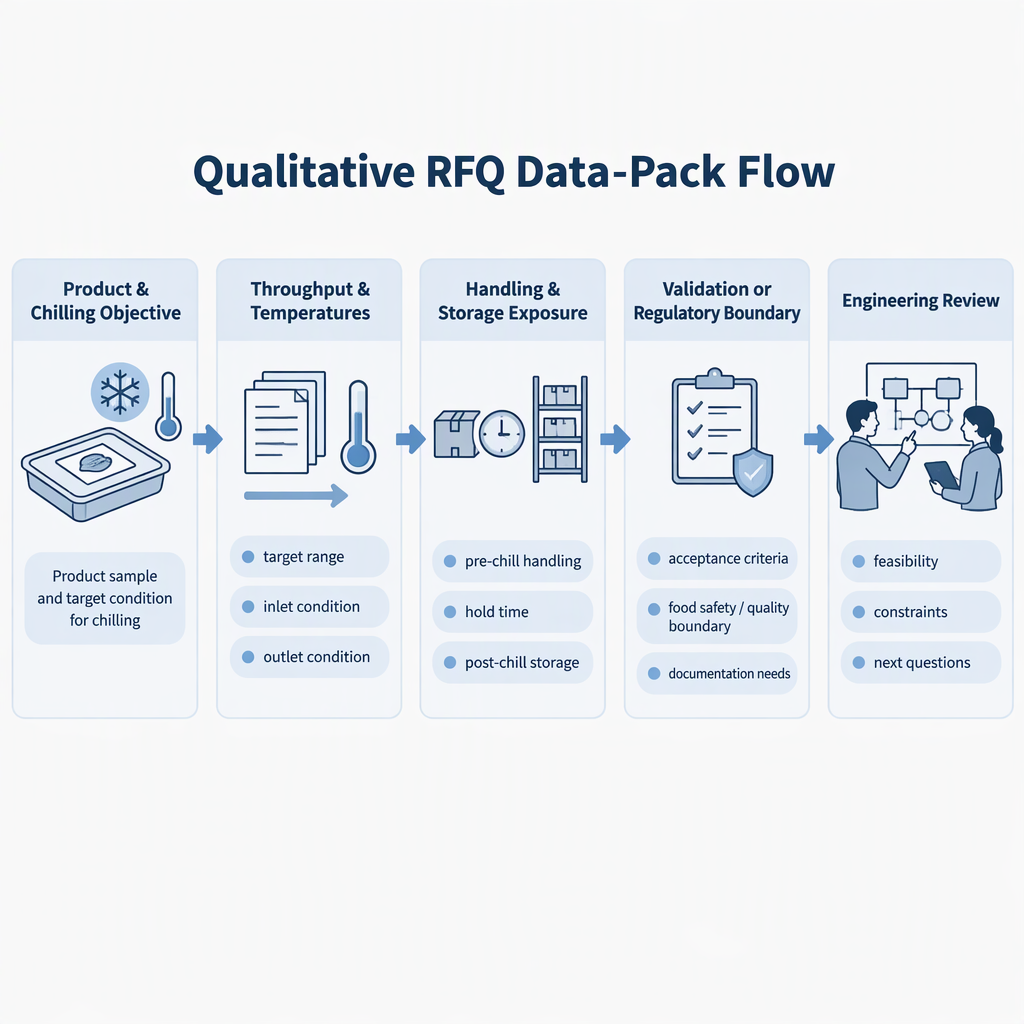
- Product type, product form, packaging state, and whether product is warm, chilled, processed, or awaiting dispatch.
- Hourly throughput, batch size, daily operating schedule, peak load, incoming temperature, target condition, and expected storage time.
- Container type, stacking or layering method, ambient exposure, transfer points, and known ice loss or meltage observations.
- Room or line conditions such as air temperature, air speed, relative humidity, loading pattern, and warm-product staging.
- Existing operating records, including fish-to-ice ratios or ice use per batch where seafood icing experience is available.
- Applicable food-safety, customer, export, or local authority requirements that quality and engineering teams must respect.
| If the buyer has... | Send this in the RFQ | Ask the supplier to return |
|---|---|---|
| Known seafood icing records | Fish-to-ice ratio, product mass, container, exposure time, and temperature records. | A preliminary estimate with assumptions and a plan for confirming the ratio on site. |
| A meat chilling or staging room | Product form, loading pattern, air conditions, arrangement, and warm-load timing. | A discussion of how those variables affect the proposed ice-cooling approach. |
| A regulated stabilization step | Applicable authority or customer requirement and the plant validation responsibility. | A boundary statement separating equipment discussion from food-safety validation. |
Conclusion
Ice cooling for meat or seafood processing should start with measured process data, not with an isolated ice-capacity request. Product form, loading, arrangement, and room conditions shape the chilling task. Validation and local regulatory questions should be handled by the plant’s quality and authority-review process.
- Provide mass, temperature, time, container, exposure, and loss assumptions before asking for an ice-demand estimate.
- For meat applications, include product arrangement, cold-room conditions, and warm-product loading patterns.
- Keep equipment selection, operating trials, and food-safety validation as separate decisions.
FAQ
These questions help procurement, operations, and quality teams turn process knowledge into a clearer ice-cooling discussion.
Should seafood plants provide fish-to-ice ratio data if they already have operating experience?
Yes. Existing fish-to-ice ratios, product mass, temperatures, container types, and storage conditions are useful because operating tests help establish the correct ratio under real conditions.
Does meat type or product form matter when planning chilling?
Yes. Product type, carcass or cut form, loading, arrangement, and cold-room conditions influence meat chilling and should be provided before an ice-cooling proposal is evaluated.
Is this legal food-safety advice for every country?
No. For global projects, treat regulatory and customer standards as project-specific requirements. Provide the applicable authority documents to the plant’s quality, engineering, and legal review teams.
What is the minimum data set before asking for a preliminary ice estimate?
At minimum, provide product mass, incoming temperature, target condition, operating schedule, exposure time, container details, and any known losses or contingency assumptions.
Why do containers and staging time change the estimate?
Containers, storage time, ambient exposure, and heat transfer affect ice meltage, so the same product mass can require different ice usage in different handling systems.
Can the supplier’s calculation replace plant trials?
No. A calculation is a planning tool. Buyers should still confirm performance through operating checks, temperature records, and site conditions.
What should procurement expect back from a supplier?
Procurement should expect a preliminary ice-demand estimate with stated assumptions for mass, temperature, exposure, containers, losses, and testing needs. If food-safety stabilization is involved, the response should also identify validation boundaries rather than presenting equipment selection as regulatory approval.
